Ja'Mesha Robinson
Case Study

FOCUS

Financial awareness without another app.

An ambient financial awareness lamp that uses light and voice to communicate financial status, with a companion dashboard for deeper insights.

Role
UX Research, Product Design, Hardware Prototyping & Development
Context
Duke M.Eng. project
Built With
Python, Raspberry Pi, NeoPixel, Plaid, MQTT / HiveMQ, Claude API, ElevenLabs, Streamlit
Status
Working prototype · Presented
The challenge

The problem

Financial tools put information at our fingertips, but staying informed still requires effort: opening an app, interpreting numbers, and figuring out what needs attention.

For people experiencing financial stress or information overload, that process can become another task to manage, or avoid.

What if financial awareness could start without opening another screen?

Secondary research

Research insight

Financial awareness isn't just about accessing information. It's also about understanding what that information means.

A 2021 study examining financial judgment found that adults with ADHD scored significantly lower on measures of understanding financial information compared with adults without ADHD.

This highlighted an important distinction for my design exploration: access to information doesn't automatically make it understandable.

Design takeaway: Separate awareness from explanation. Use ambient light to signal when something deserves attention, and provide plain-language insights when users want more context.

What I built

How it works

Four connected steps turn financial data into ambient light, with optional AI-powered explanations.

  1. 01 · Plaid
    Connect
    Plaid retrieves connected account balances every 10 seconds.
  2. 02 · Python publisher
    Interpret
    A Python publisher evaluates account balances against defined financial goals and assigns green, yellow, or red status indicators.
  3. 03 · MQTT + HiveMQ
    Communicate
    MQTT sends status updates through a cloud broker to the Raspberry Pi.
  4. 04 · NeoPixel + Claude + ElevenLabs
    Experience
    The lamp displays the corresponding light state. Users can also request AI-generated insights or receive scheduled voice summaries.
Financial data, rules-based interpretation, MQTT communication, and physical output.
Early electronics prototyping and component integration.
Why I made those choices

Design decisions

01 · Ambient awareness

Make information visible without demanding attention

Rather than adding another notification or dashboard, I explored whether a physical object could communicate financial status in the background.

Ambient light became a way to make changes noticeable without requiring users to actively check their accounts.

The goal was to support awareness without constantly interrupting someone's attention.

Working FOCUS prototype demonstrating ambient light behavior and voice output.
02 · Physical prototyping

Design something people would actually want in their space

My early concepts included an interactive cube and magnetic tiles. But the cube introduced another problem: it wasn't visually appealing and could become an eyesore in someone's home.

I wanted FOCUS to feel like part of the environment, not another piece of technology demanding attention.

That led me to a lamp.

Unlike the cube, the lamp had a purpose beyond financial awareness. It could function as an everyday light while quietly communicating financial status when needed.

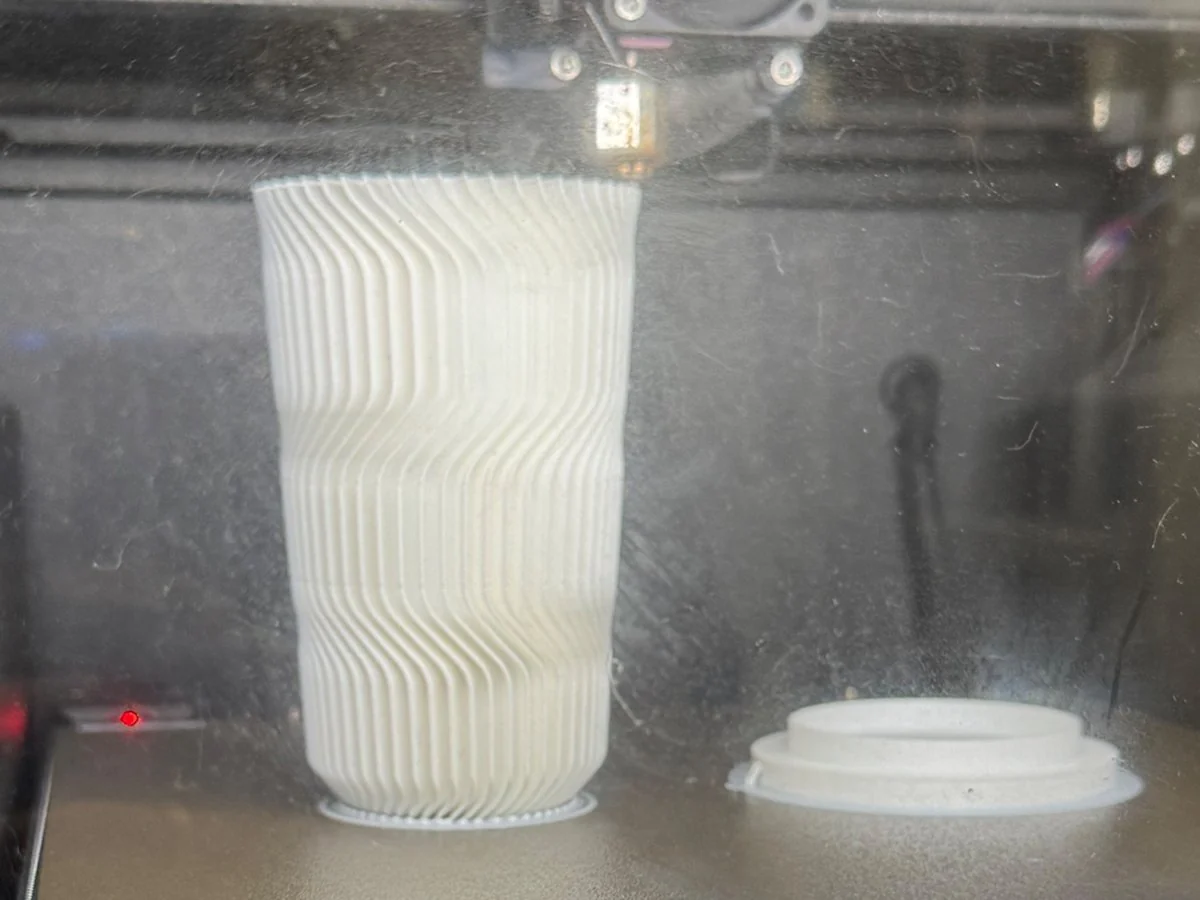
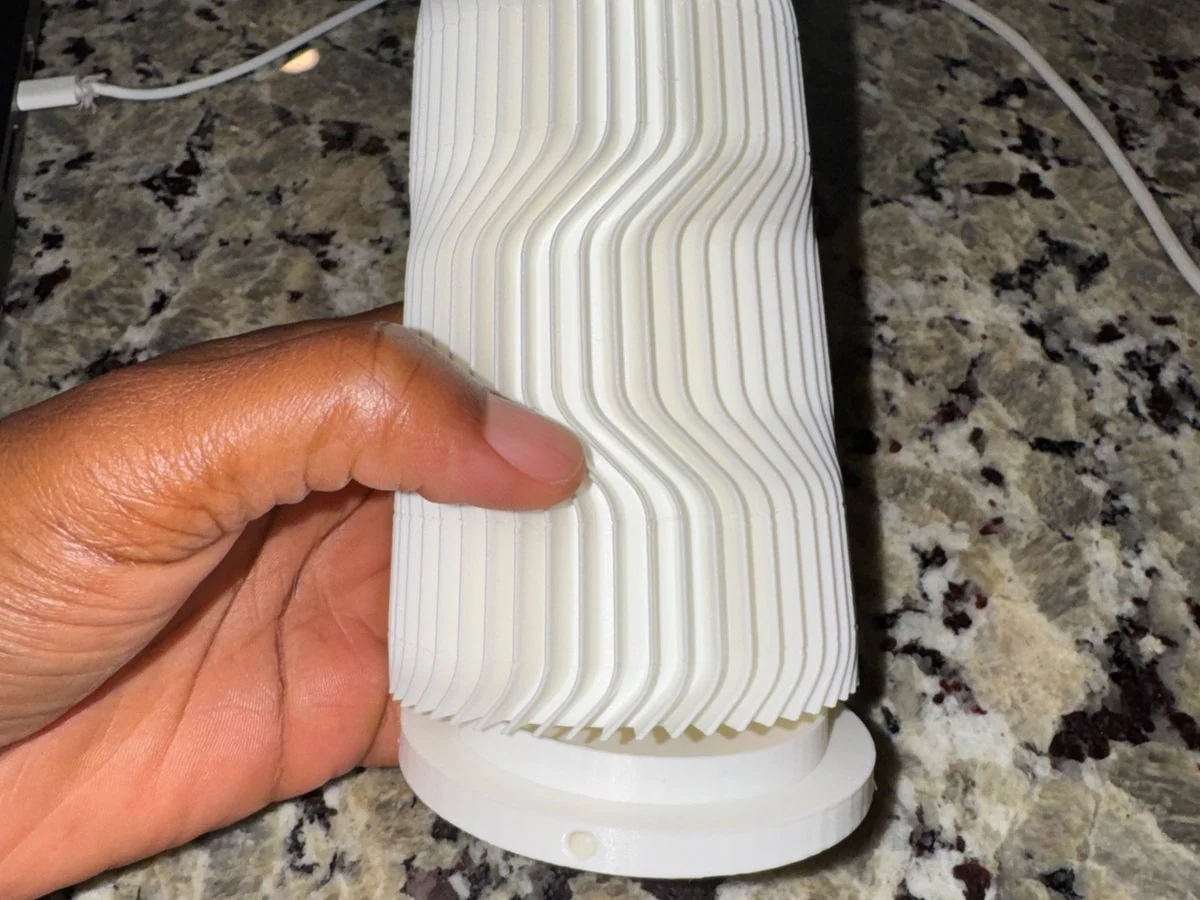
I developed a ribbed, 3D-printed enclosure that balanced the product's visual appearance with its physical functionality.

Design takeaway: A useful product should fit naturally into someone's life, even when its primary technology isn't being used.

The FOCUS lamp shade and base printing in white on a Prusa 3D printer
3D-printing the custom FOCUS lamp enclosure.
Hand holding the ribbed, 3D-printed FOCUS lamp enclosure seated on its white base
Evaluating the printed enclosure and assembled base.
03 · User control

Let users choose how much information they need

A color can signal that something needs attention, but it doesn't explain why.

I designed the companion dashboard to provide that additional context. Users can review connected accounts, personalize lamp settings, and request AI-generated insights that translate financial information into plain-language suggestions.

The goal was to support understanding without making financial decisions for the user.

Design takeaway: Awareness should be simple. Understanding should be available on demand.

Connected accounts, financial status indicators, scheduled summaries, and personalized lamp settings.
On-demand Claude insights translate account information into plain-language suggestions.
How I communicated the concept

From Prototype to Product Story

FOCUS combines financial data, AI, software, and a physical object. Communicating how those pieces work together became a design challenge of its own.

I created this poster to explain the complete experience, from connecting an account and interpreting financial status to ambient light, scheduled voice summaries, and on-demand insights.

FOCUS product experience poster: connecting hardware, software, and user interactions.
What I learned

Outcome

FOCUS evolved from early physical interaction concepts into a working ambient financial awareness prototype.

The project brought together connected financial data, rules-based status indicators, Raspberry Pi hardware, custom 3D-printed fabrication, AI-generated insights, and voice interactions.

One of the biggest lessons was that building something technically possible doesn't automatically make it desirable.

Moving away from the cube helped me recognize that the physical form mattered just as much as the technology. The lamp offered a more natural fit for everyday environments while retaining the functionality I wanted to explore.

FOCUS also reinforced the importance of giving users different levels of engagement: a simple visual signal for awareness, and a dashboard for more detailed explanations.

What I'd explore next: Test the prototype with users to understand whether ambient signals are easy to interpret, whether the lamp fits naturally into their routines, and whether the AI-generated insights provide useful context without increasing financial stress.

Next project Inclusive Design Lab